Blog 4 min read
Song-structure tweaks that boost creator adoption in short-form
Want more creators using your music? Discover simple song structure tweaks that boost adoption and increase viral potential.
TL;DR: The first three seconds are make-or-break in short-form. Listeners skip fast, platforms reward immediate impact, and memory forms around tiny, distinctive musical cues. Front-load your track with (1) a cold open (no fade-in), (2) an instant vocal or motif, (3) a micro-hook with a tiny surprise (interval leap, rhythmic flip), and (4) phone-speaker-friendly sonics. Then test multiple “creator edits” and measure what wins.
Why the first 3 seconds decide your fate
- Skips happen immediately. At streaming scale, 24.14% of plays are skipped in the first 5 seconds; ~48.6% before the end (Echo Nest/Spotify analysis of billions of plays). That steep early drop is the danger zone your song must cross.
- Intros have collapsed. In mainstream hits, instrumental intros shrank from ~20s in the mid-80s to ~5s. Recent hits also get to the first lyric and title (“hook”) faster, reflecting an “attention economy.”
- Platforms reward instant recall. TikTok’s own marketing science finds ~50% of total ad recall and awareness impact lands in the first ~2–2.5 seconds—a strong proxy for how quickly creative must “register.”
- Brains recognize hooks fast. In the “Hooked on Music” experiment (12k participants), people recognized Spice Girls’ “Wannabe” in ~2.3 seconds, underscoring how tiny, distinctive cues anchor memory.
- Cognition 101: Pleasure and attention rise when expectation and surprise are balanced—even at chord-to-chord scale. Build a little uncertainty, then deliver a small twist.
The 0:00–0:03 engineering plan (what to change tomorrow)
- Cold open, not a fade-in
Start on the downbeat with full-band or a sharply profiled element (drum fill, riser “whoosh-stop”, breath+word). Long ramps waste your most valuable window. The macro trend away from long intros backs this. - Lead with a voice or a signature earcon
The human voice is highly attention-grabbing, and TikTok is sound-on by default. Put a lyric fragment or chant before 0:02, or a distinctive timbre if you must start instrumental. - Plant a “micro-hook” immediately
In 0:00–0:03, give listeners a short, singable cell they can imitate (two-to-five notes). Earworm research shows fast tempos + simple contours + a small unusual interval or repetition predict stickiness. Design your micro-hook to do exactly that. - Add a tiny surprise (without confusion)
A mini leap, hemiola, or syncopated pickup makes the brain perk up; we like patterns with a measured deviation. This is expectation/surprise doing its work. Keep the twist small so creators can lip-sync and loop it.
Practical recipes (ready-to-try edit templates)
- “Chant → Word → Drop” (0:00–0:03)
0:00 one-beat chant (“hey!” / “woah”), 0:01 title word on a leap (e.g., up a 4th), 0:02 beat accents (tom fill or clap flam). This balances simplicity with a micro-surprise. - “Breath + Confession” pickup
0:00 audible breath + 1-bar spoken confessional (“I did a thing—”), 0:02 sung answer. Speech-to-song transitions leverage voice salience. - “Hook in unison”
0:00 lead + octave double on the hook cell, guitars/keys shadowing the motif to increase recognition (think “they get it in 2–3 seconds”).
The science behind these moves
- Skip pressure: The highest skip probability sits in the first seconds; winning those seconds changes the entire survival curve of a track.
- Attention capture: Short, abrupt onsets and salient vocal cues rapidly orient auditory attention, which is exactly what you need before a viewer swipes.
- Pleasure via micro-surprise: Listeners report higher enjoyment when uncertainty and surprise are balanced—your 0:00–0:03 can deliver that “small twist” safely.
- Memory & recognition: Hooks can be recognized in ~2–3 seconds when they’re distinctive and conventional enough to sing—exactly the window creators sample.
- Platform guidance: TikTok creative research emphasizes impact in the first 2–2.5s; YouTube’s analytics explicitly measure intro retention (first 30s) and recommend front-loading compelling content—parallels that reinforce the short-form imperative.
Make “creator edits” your default deliverable
Release alongside your master:
- Edit A (Instant-Vocal Cut) — vocal in first 0.5s, micro-hook stated twice by 0:03.
- Edit B (Motif-Forward Cut) — signature riff up front, lyric enters by 0:02.
- Edit C (Beat-Switch Tease) — tiny rhythmic fake-out then resolution (safe surprise).
Why multiple? Because earworms are partly musical (tempo/contour) and partly extra-musical (exposure/context)—testing variants increases your odds.
How to test (and prove it worked)
Instead of only testing posts organically, use Sound.me campaigns as your testing ground. This gives you structured, scalable experiments:
- Create 2–3 separate campaigns on Sound.me, each using a different version of your 0:00–0:03 edit (e.g., Vocal-first vs. Motif-first).
- Assign creators across campaigns so each edit gets pushed by multiple styles of content (lip-sync, POV, transitions).
- Track views, likes, comments and shares for every video in the Sound.me dashboard, and watch sound adoptions on the TikTok sound page.
- Compare campaigns head-to-head: which intro produces more creator uptake, stronger engagement, and higher conversions into streams or follows?
- Use winner insights to decide which edit to prioritize for your main release and cross-platform rollout.
This method turns your hook engineering into real-world A/B tests at scale, with measurable outcomes, not just guesses
Common pitfalls (and how to avoid them)
- Pretty intros that go nowhere → Trade the pad swell for a cold open hook. Intros are shorter now for a reason.
- Sub-heavy first hit → Most phones won’t reproduce it; shift weight to upper harmonics and midrange for punch.
- Too weird, too soon → Keep the surprise small; large violations of expectation can feel wrong in 3 seconds.
Put a sound in front of 3M+ creators
Artists, labels and brands launch a TikTok, Instagram Reels or YouTube Shorts campaign in minutes. Creators get paid for each approved video, based on the views it gets in its first 72 hours.
Keep reading
All posts → How to Choose the Ideal Countries to Target as an ArtistHow to Choose the Ideal Countries to Target as an Artist: a practical, metrics-first playbook that works whether you release electronic, hip-hop, rock/metal, Latin, K-pop, or anything in between.
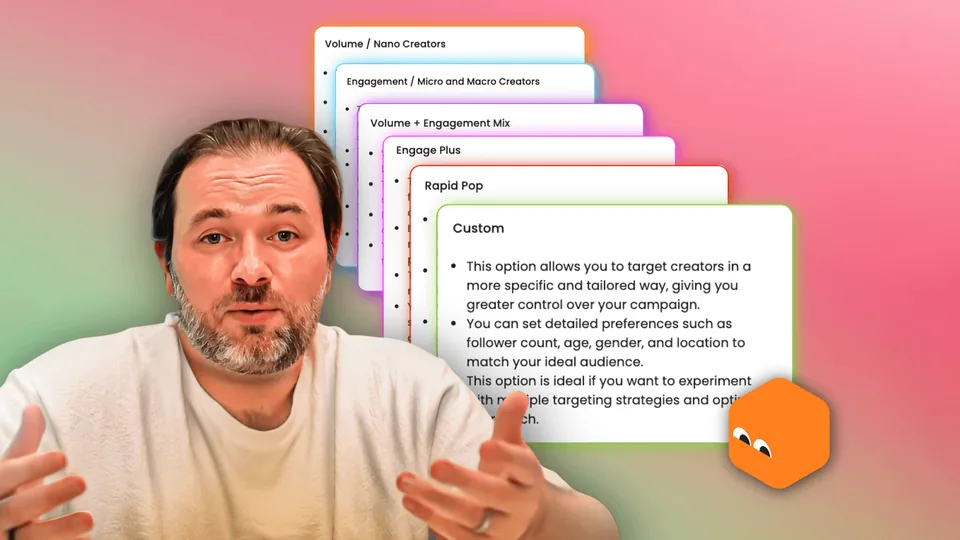 Choosing the Right Campaign Setup on Sound.me: A Guide for Artists and BrandsHow to pick the platform, budget, run time, creator size, targeting and directions for a Sound.me campaign, and what each choice changes.
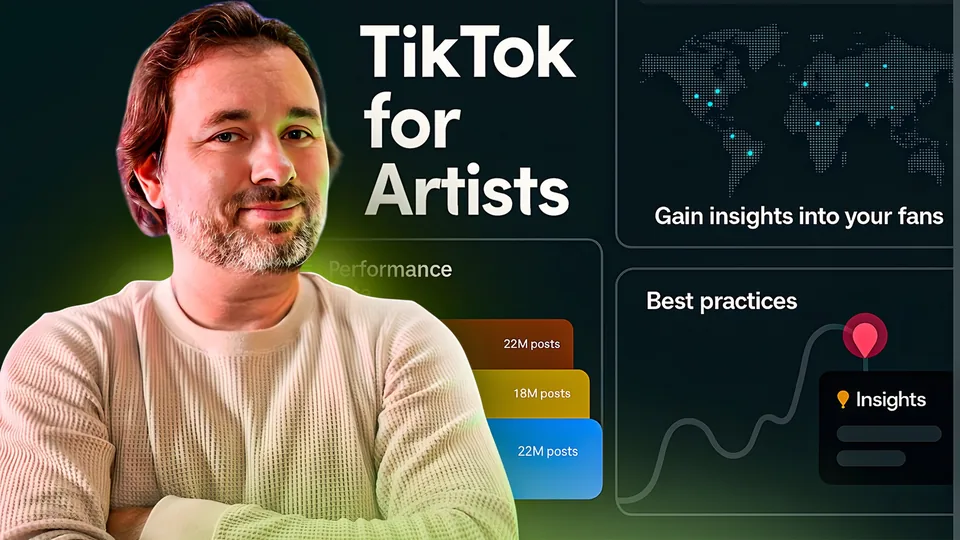 Is TikTok the New Spotify for Indie Artists?TikTok is emerging as a key music discovery platform for indie artists, offering powerful tools and insights through its new artist dashboard. It’s not replacing Spotify—but it’s where fans find new music first.